
The WMG Deal Changed Everything: What Suno Isn't Telling You
If you haven’t noticed the "vibe shift" in the AI music industry lately, you aren’t looking closely enough at the fine print.
The era of "Scrape Everything" is dead. In late 2025, Suno finalized a landmark settlement with Warner Music Group (WMG), effectively ending the litigation that threatened the platform's existence. But that peace treaty came with a heavy price for the end user: The implementation of the 2026 Licensed Model Era.
Suno is no longer a rebellious startup; it is now a partner to the majors. And that means the "Wild West" rules you started with are officially gone.
What Changed: The Deprecation of Freedom
As part of the WMG deal, Suno has begun deprecating its legacy models (V3.5 through early V5). These models were trained on unlicensed data—the very data the labels sued over. The "New Suno" is being rebuilt on Licensed AI Models where artists must opt-in to have their style or voice included.
If you are still trying to "glitch" the system to sound like a specific artist, you are fighting a losing battle against a Content ID system that is now integrated directly into the Suno engine.
The Three New Rules of 2026
1. The Likeness Trap (NO FAKES Act) The federal NO FAKES Act is now in full effect. It provides a "property right" to an individual's voice and likeness. If you generate a vocal that is "dangerously close" to a famous artist—even if you didn't use their name in the prompt—you are liable. Platforms like Spotify and TikTok now use "Likeness Detection" to mute tracks that violate these federal protections.
2. The End of the "Style-Of" Hack Prompting "In the style of [Famous Artist]" used to be the gold standard. In 2026, it is the fastest way to get your generation blocked. Suno’s internal filters now actively monitor for artist-specific trademarks and vocal timbres.
3. The Content ID "Mute" WMG and other majors have provided their "Digital Fingerprints" to Suno. If your generation crosses a similarity threshold with a copyrighted composition, it won't just be rejected by your distributor—it will be flagged before you even hit the "Download" button.
Case Study: The $200 Mute
Last month, we tested a "Country-Pop" prompt. We didn't mention names, but the AI generated a vocal timbre that was a 92% match for a WMG superstar. We spent 10 generations ($200 in credits) perfecting the "vibe."
We uploaded it to TikTok. Within 48 hours, the audio was muted. Not because of a lyric match, but because of Likeness Detection. The credits were wasted, the momentum was killed, and the account received a "Compliance Warning."
The "Compliance DO NOT List"
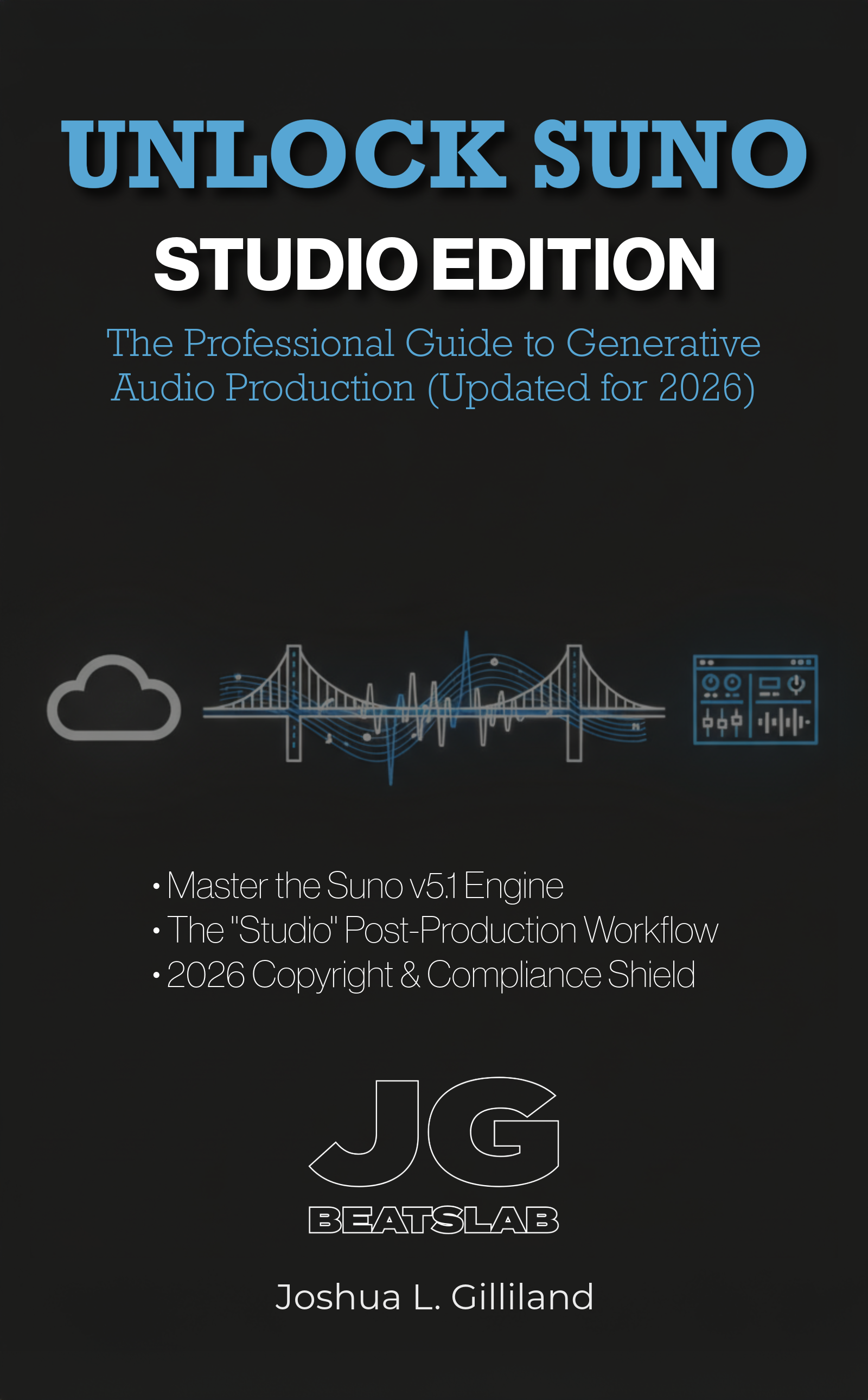
Professional creators don't gamble with their accounts. In Chapter 1 of Unlock Suno: Studio Edition, we provide our Master Compliance List. It includes:
The specific "Blacklisted" phrases that trigger silent muting.
The "Vocal Originality" filters to ensure your Persona is unique.
How to use Genre Splicing to bypass likeness detection legally and creatively.
The rules have changed. It’s time to play the professional game.
Ready to stay compliant?
Get the Digital Version (Instant Download): Unlock Suno: The Complete Guide
Order the Physical Studio Edition (Paperback/Hardcover): Available on Amazon
