
Why One Single Every Five Weeks Beats Releasing an Album
Most independent musicians still think in album cycles. You spend months writing and recording, you release the album, you promote it for a while, then you disappear to make the next one. It feels like the serious, artful way to do it.
In 2026, it's also the way to make your music invisible.
Streaming platforms don't reward patience and rarity. They reward consistency and freshness. And once you understand how the algorithm actually treats a new release, the case for singles over albums stops being a matter of taste and becomes a matter of math.
The freshness window is the whole game
When you release a track, Spotify's algorithm flags it as new and gives it active consideration for roughly 14 to 30 days. During that window, Release Radar and Discover Weekly include it more aggressively, radio playlists refresh around it, and the system is paying attention. After about 30 days, the track settles into its baseline. It can stay in rotation if it has strong engagement, but it stops getting the novelty boost.
Here's the insight that changes everything. If you release every four to five weeks, you always have one track inside that freshness window. When track A hits day 30 and loses its boost, track B enters day 1 and picks it up. The novelty window becomes perpetual. You're getting roughly a dozen algorithmic boosts a year instead of one.
Release an album once a year, and you get a single 30-day spike followed by eleven months of slow decline while listeners drift to artists who keep showing up.
The math is stark
Aggregated distributor data makes the gap concrete. An album release tends to look like a big first-month spike, around 50,000 streams, then a long decline through the year, settling into low thousands per month. Annual total: somewhere around 80,000 streams.
A single every four weeks looks completely different. Each release gets its own boost, the catalog compounds as earlier tracks tail off while new ones launch, and the portfolio settles into a steady monthly volume rather than a decline. Annual total: 150,000 streams or more.
Same year. Same artist. Roughly double the streams, just from changing the release structure. And this holds even when the singles are shorter or simpler than the album tracks would have been, because the algorithmic boosts compound in a way a single release date never can.
The realistic cadence is every five weeks, not every week
Don't overcorrect into releasing weekly. That's unsustainable and it actually confuses the algorithm. The sustainable sweet spot for most independent creators is one release every five weeks, roughly ten a year. That keeps something fresh in the system at all times, leaves enough breathing room between releases to actually promote each one, and gives you a natural monthly planning rhythm you can keep up without burning out.
The album hasn't disappeared, by the way. It still works as a branding and marketing event. But the release strategy underneath it has to be singles-first, with the album as something you assemble and frame later, not the unit you build your whole calendar around.
One myth worth killing while we're here: pre-saves
Since we're talking release mechanics, here's a related thing most artists get wrong. Pre-saves are constantly sold as the key to "cracking the algorithm." Get 10,000 pre-saves and you're set.
Pre-saves create zero algorithmic signal on Spotify. The platform doesn't weight them in its recommendations. A track with 5,000 pre-saves and a weak post-release save rate will lose to a track with 500 pre-saves and a strong one, because a pre-save is a low-commitment click and the algorithm is watching what people actually do on release day.
Pre-saves do two real things: they capture intent you can turn into an email contact, and they produce day-one listening volume from people who already know you. That day-one volume matters. The pre-save number itself doesn't. And if you're optimizing your release for algorithmic lift, the thing to chase isn't pre-saves at all, it's followers, because Release Radar (the one guaranteed algorithmic placement) is triggered by followers, not by pre-saves.
The takeaway
If your music feels like it disappears a month after every release, the problem probably isn't the music. It's the cadence. You're giving the algorithm one chance a year to notice you when you could be giving it ten.
This is one piece of a much larger system. The full release-cadence playbook, the pre-release mechanics, the editorial pitch window, and the honest math on every promotion channel worth your time live in Unlock Music Promotion, the independent creator's guide to getting heard without falling for the advice that's really just sales copy. It's $9.99. [Get Unlock Music Promotion.]
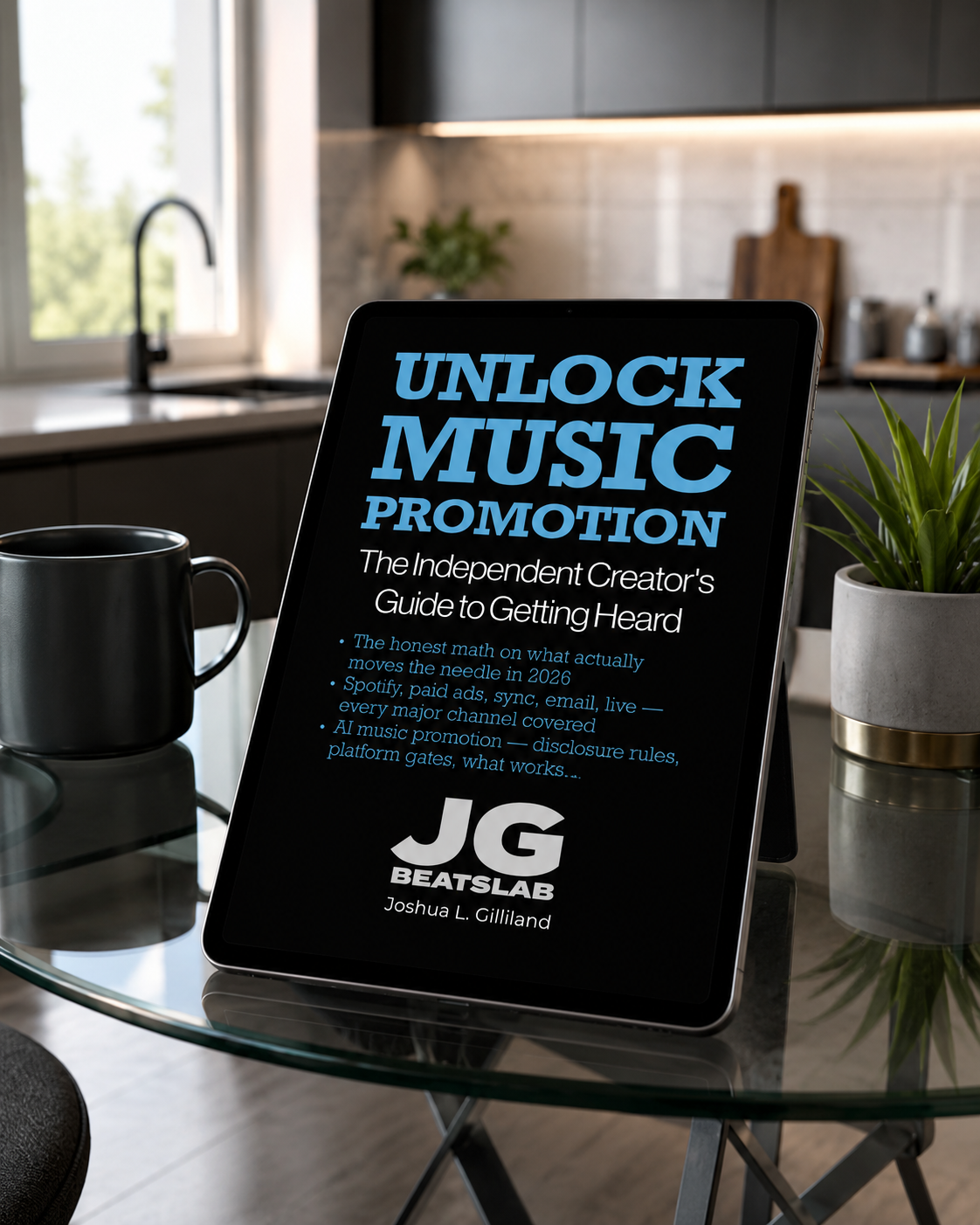
You made the track. Here's how to get it heard.
Most independent creators are great at making music and terrible at getting it heard. Not because they're not trying. Because the music promotion industry runs on advice that's structurally designed to keep you spending without working.
A promotion service that makes money selling playlist placements has no incentive to tell you that playlist placements alone rarely work. A podcast sponsored by an ad network has no incentive to tell you that Meta Ads cost-per-acquisition is often worse than the math suggests. A YouTuber with SubmitHub affiliate links has no incentive to tell you that 60% of SubmitHub submissions get declined.
The independent music promotion industry has become an echo chamber of hope dressed as strategy.
This book is not that.
━━━━━
What's Inside
58,000+ words. 22 chapters across 6 parts. 4 appendices. The complete music promotion landscape for independent creators in 2026, with every claim sourced and every recommendation grounded in actual platform mechanics.
Part I: Foundation. The math of 2026, the AI dimension, and the four diagnostic questions you ask before every campaign.
Part II: Streaming Platforms. Spotify discovery architecture, Spotify's paid stack (Marquee, Showcase, Discovery Mode), Apple Music, YouTube, Amazon, Tidal, Pandora, SoundCloud, and the release cadence mechanics that determine whether the algorithm picks you up.
Part III: Playlists, Paid Promotion, and Fraud. Legitimate playlist services, the playlist scam industry, paid ads across Meta, TikTok, YouTube, and Google.
Part IV: Social and Discovery. TikTok after the USDS deal, Reels and Shorts for the 45–65+ demographic, narrow-purpose platforms (LinkedIn, Threads, Bluesky, X).
Part V: Owned Channels. Email and newsletters — the most undervalued asset. Subscription, patronage, community. Bandcamp, the AI ban, and the direct-to-fan gap.
Part VI: Beyond Streams. Sync licensing. Press, podcasts, and the death of the music blog. Brand partnerships and cross-promotion. Live performance. Distribution and the AI music dimension. The long game.
Plus four appendices: Service Comparison Reference, Glossary, Promotion Math Quick Reference, and Resource Directory.
━━━━━
What You'll Master
How Spotify's algorithmic discovery actually works and what signals drive Discover Weekly and Release Radar placement. The Spotify Paid Stack — Marquee, Showcase, Discovery Mode — and when each is worth the spend. Release cadence mechanics: pre-save windows, day-one signals, and the 14-day algorithmic window. Legitimate playlist services versus the scam industry, and how to tell which is which. Paid ad math across Meta, TikTok, YouTube, and Google — what works, what doesn't, what the real CPA looks like in 2026. TikTok and Reels strategy for the 45-65+ creator specifically. The owned-channel layer: email, newsletter, subscription, community. Sync licensing — the highest-margin channel an independent can access. Distribution and AI disclosure mechanics in 2026.
━━━━━
⭐⭐⭐⭐⭐ "Makes me feel more like a producer rather than a helpless user. I now have a workflow and a methodology for maximizing what I get out of Suno." — Verified Purchase
━━━━━
Want the Full System: The Red Lab Library
Unlock Music Promotion is one book. The Red Lab Library is the entire system, in one place, for one price.
✓ All seven books: Unlock AI Music, Unlock Suno: The Complete Guide, Unlock Music Rights and Registration, Unlock Music Promotion, Unlock Mureka, Unlock Reaper, and The AI Music Revolution
✓ Red Lab Protocol research reports: blind-tested platform comparisons
✓ Red Lab Case Studies: end-to-end production breakdowns of real tracks
✓ Genre Blueprints: tested prompt frameworks ready to use, the majority Red Lab Exclusive
✓ The Field Notes and the Quick Start Kit
✓ The 3-Song Sprint course
✓ Fader, your AI Studio Manager
Hundreds of creators across dozens of countries. $97, one time. No subscription.
jgbeatslab.com/store/p/red-lab-library
━━━━━
Format
Instant digital download — PDF and ePub. Compatible with all major e-readers and PDF viewers.
━━━━━
After Purchase
You'll see a download button on screen immediately. A download link will also be emailed to you — check your spam folder if you don't see it. Need help? Visit jgbeatslab.com/order-help
